+86 173 3000 3202


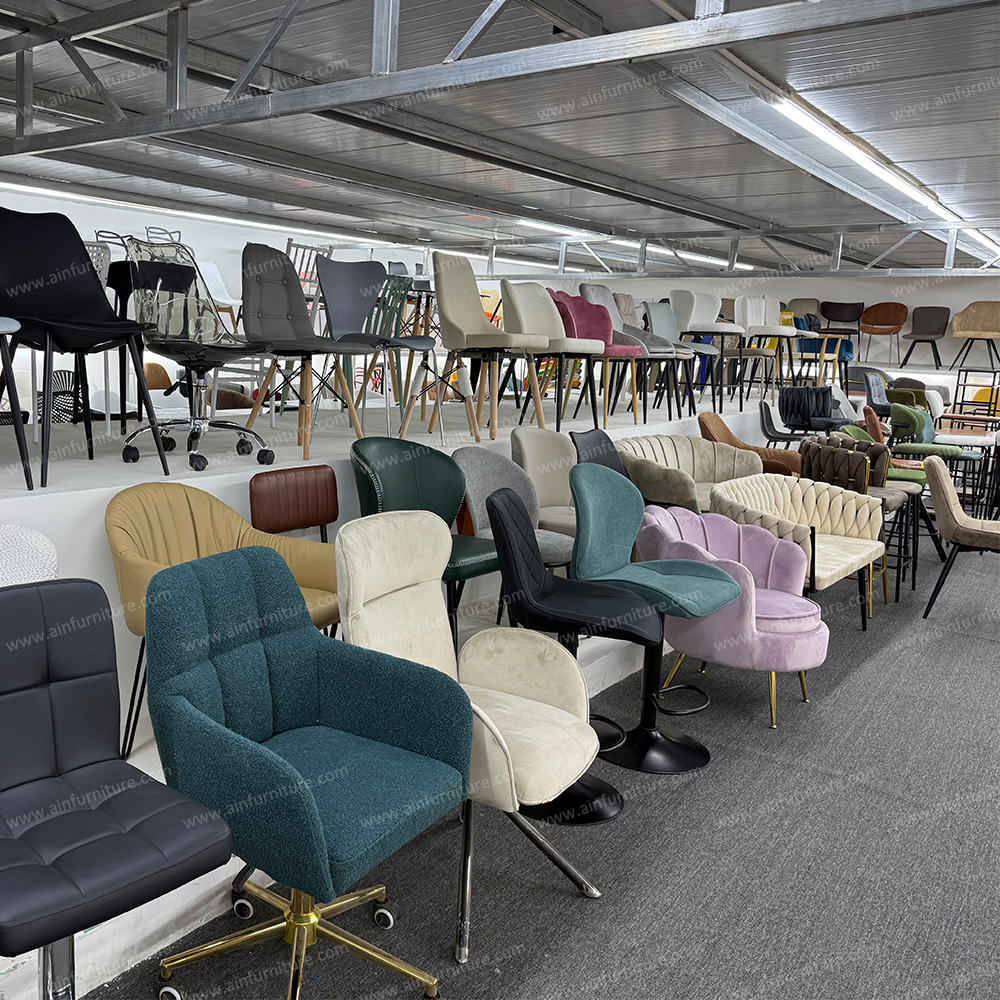
China remains an important sourcing destination for international furniture buyers. With a wide range of manufacturers, competitive production costs, and flexible customization options, Chinese suppliers offer various dining chair solutions for wholesalers, retailers, furniture brands, and hospitality projects.
However, importing dining chairs from China in 2027 requires careful planning. From selecting the right manufacturer to checking product quality, import regulations, shipping arrangements, and customs duties, every step can affect your purchasing costs and business profitability.
Here are 10 important things to consider when importing dining chairs from China in 2027.
1. Choose a Reliable Dining Chair Manufacturer
Finding the right supplier is the first step toward successful furniture importing.
Not all suppliers have the same manufacturing capabilities. Some focus on trading, while others operate their own production facilities.
Before placing an order, consider checking:
Manufacturing experience and production capacity
Factory facilities and production equipment
Product development and customization capabilities
Quality control procedures
Previous export experience
Customer references and business reputation
A professional dining chair manufacturer should be able to provide product specifications, factory information, samples, and clear production schedules.
2. Understand Different Dining Chair Materials
Dining chairs are available in various materials and constructions. Choosing the right materials depends on your target market, product positioning, and budget.
Common dining chair types include:
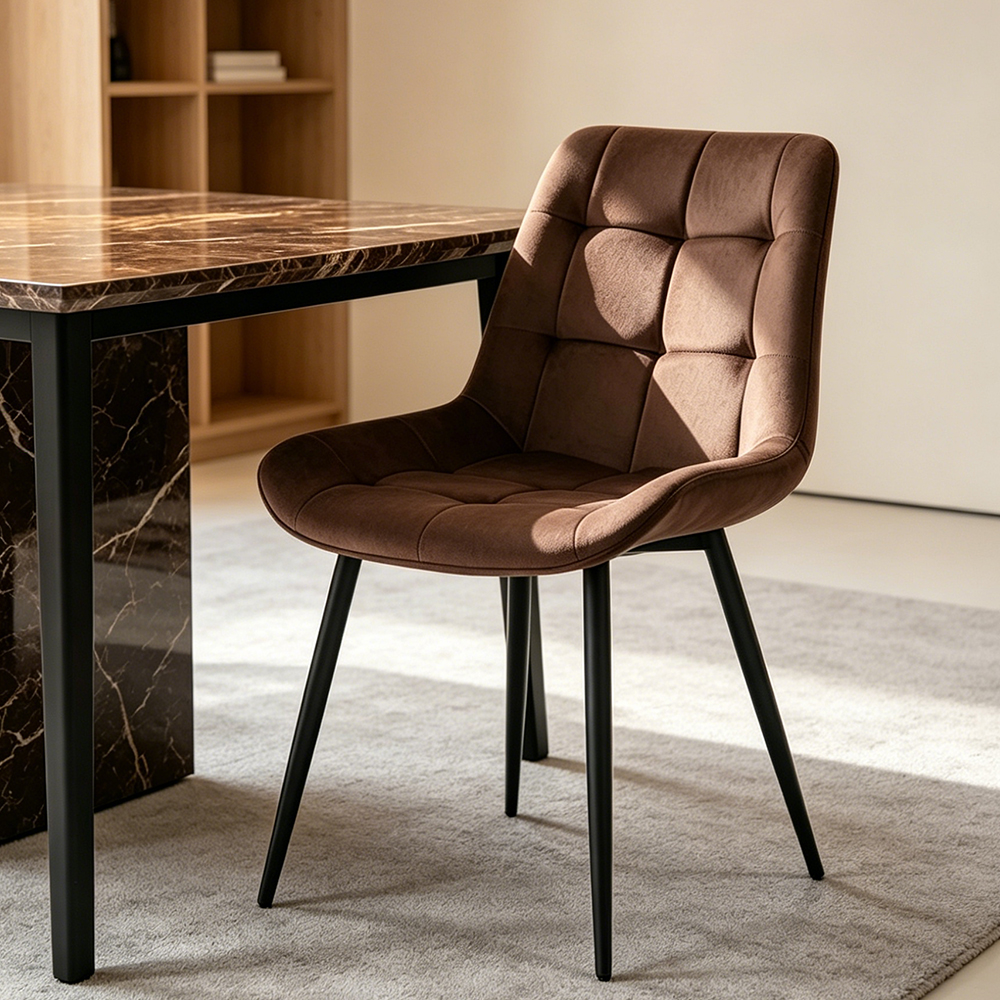
Upholstered Dining Chairs: Available in velvet, linen, polyester, leather, and other fabrics. They are popular for residential and hospitality interiors.
Wooden Dining Chairs: Made from solid wood, plywood, or engineered wood. Common options include oak, ash, beech, and walnut.
Metal Dining Chairs: Featuring steel or aluminum frames, suitable for modern homes, restaurants, and commercial applications.
Plastic Dining Chairs: Lightweight, easy to maintain, and available in different colors and designs.
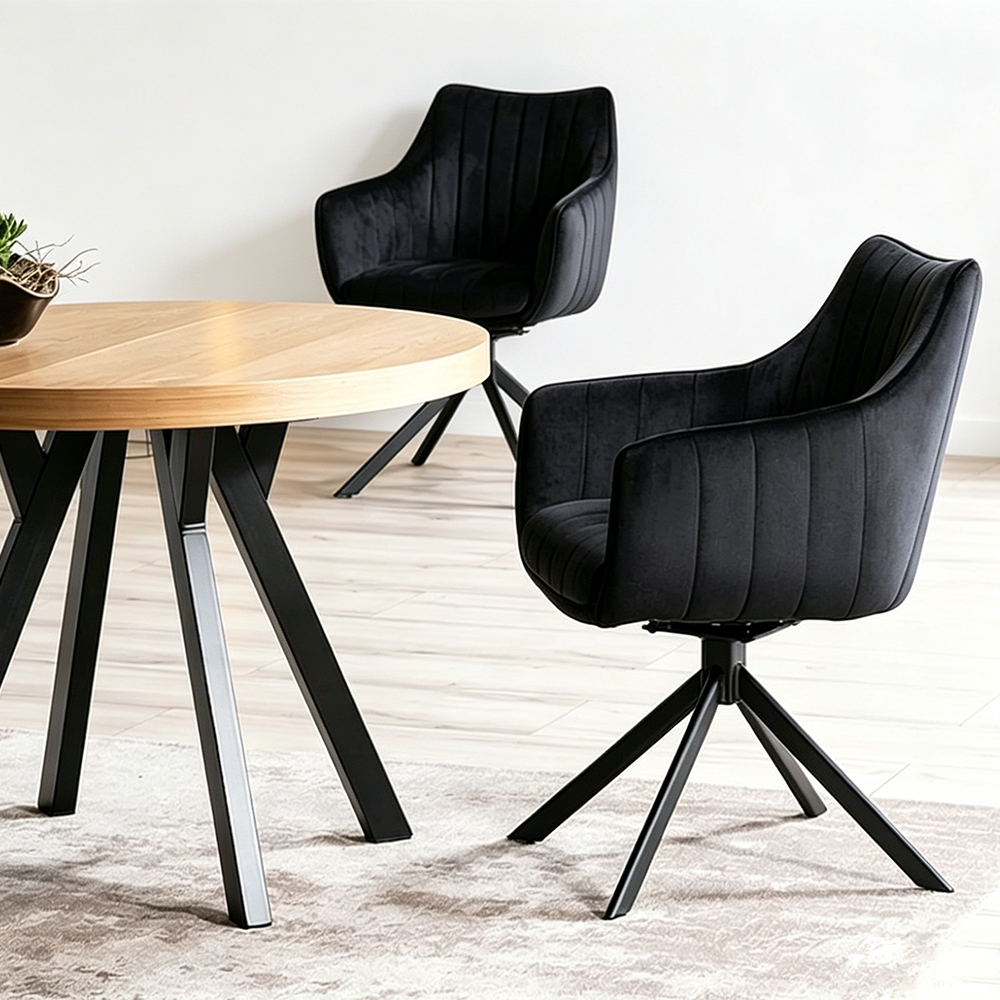
Swivel Dining Chairs: Designed with rotating mechanisms for added convenience and flexibility.
Before ordering, confirm the material composition, dimensions, color, weight capacity, and finishing requirements.
3. Check Product Quality and Manufacturing Standards
Product quality directly affects customer satisfaction, return rates, and brand reputation.
Before mass production, request samples and evaluate the following details:
Frame strength and structural stability
Welding quality and joint finishing
Fabric durability and color consistency
Foam density and seat comfort
Wood moisture content and surface finishing
Leg stability and floor protection
Assembly and hardware quality
For upholstered dining chairs, buyers should also consider fabric abrasion resistance, seam strength, and filling materials.
For metal-frame chairs, inspect welding points, coating thickness, and corrosion resistance.
A reliable manufacturer should conduct inspections during production and before shipment.
4. Understand Import Regulations and Product Safety Requirements
Import regulations vary depending on the destination country and product construction.
Buyers should confirm applicable requirements before placing an order.
For the United States:
Upholstered indoor seating furniture generally needs to comply with the federal upholstered furniture flammability requirements under 16 CFR Part 1640, which incorporates California TB 117-2013. Applicable products also require a permanent certification label.
Buyers should also check other applicable requirements, including chemical restrictions, labeling, and state-specific regulations.
For the European Union:
Importers should review applicable product safety requirements, REACH chemical restrictions, and relevant labeling obligations.
For wooden furniture, buyers should also check whether the product falls within the scope of the EU Deforestation Regulation (EUDR). The regulation has application dates in 2026 and 2027 depending on company size and circumstances.
Always confirm the latest requirements with local customs authorities, compliance specialists, or testing laboratories before importing.
5. Calculate Import Duties and Total Landed Costs
The purchase price is only one part of the total import cost.
Before confirming an order, calculate the complete landed cost.
Typical expenses include:
Product purchase price
International freight
Marine insurance
Customs duties and import taxes
Customs clearance fees
Port handling charges
Inland transportation
Warehousing and delivery costs
The applicable HS code and import duty depend on the chair's material, construction, and customs classification, as well as the destination country and current trade measures.
Do not assume that all dining chairs have the same import duty rate.
Ask your customs broker to confirm the correct classification and applicable tariffs before shipment.
6. Pay Attention to Product Dimensions and Packaging
Furniture packaging plays an important role in transportation costs and product protection.
Before production, confirm:
Carton dimensions
Gross and net weight
Packaging materials
Number of chairs per carton
Knock-down or fully assembled packaging
Container loading quantity
For online furniture retailers, mail-order packaging is especially important.
Flat-pack or knock-down designs can help reduce shipping volume and improve container utilization.
For international shipments, check whether any wooden pallets or other solid-wood packaging materials need to comply with ISPM 15 requirements.
7. Choose the Right Shipping Method
The shipping method depends on your order quantity, delivery schedule, and destination.
LCL (Less than Container Load): Suitable for smaller orders that do not require a full container.
FCL (Full Container Load): Suitable for larger orders and offers greater control over container loading.
Air Freight: Faster but generally more expensive, usually suitable for samples or urgent small shipments.
When comparing freight quotations, check whether they include origin charges, destination charges, customs clearance, and final delivery.
Always confirm the Incoterms, such as FOB, CIF, or DDP, to understand the responsibilities of both parties.
8. Confirm Order Details Before Mass Production
Clear communication helps prevent misunderstandings and production delays.
Before signing the purchase contract or confirming the Proforma Invoice (PI), make sure all product details are documented.
Important information includes:
Product model and reference number
Material and color specifications
Product dimensions
Order quantity
Unit price and total amount
Packaging requirements
Production lead time
Payment terms
Inspection standards
Shipping terms
For customized dining chairs, approved samples, drawings, and material specifications should be used as production references.
9. Understand Production Lead Times and Quality Control
Production schedules vary depending on the chair design, materials, order quantity, and customization requirements.
A typical production process may include:
Raw material preparation
Frame manufacturing
Welding and polishing
Surface treatment
Upholstery and assembly
Quality inspection
Packaging and final inspection
Buyers should request regular production updates and confirm the estimated completion date before arranging shipment.
Pre-shipment inspection is recommended to verify product appearance, dimensions, functionality, packaging, and order quantity.
10. Build a Long-Term Partnership with Your Chinese Supplier
Successful furniture importing is not just about finding the lowest price.
A reliable long-term supplier can help you develop new products, improve packaging, control production costs, and maintain consistent quality.
Look for manufacturers that offer:
Flexible OEM and ODM services
New product development
Stable production capacity
Consistent quality control
Reliable export experience
Responsive communication
Long-term after-sales support
Building a strong supplier relationship can make your furniture sourcing business more efficient and competitive.
Why Import Dining Chairs from China?
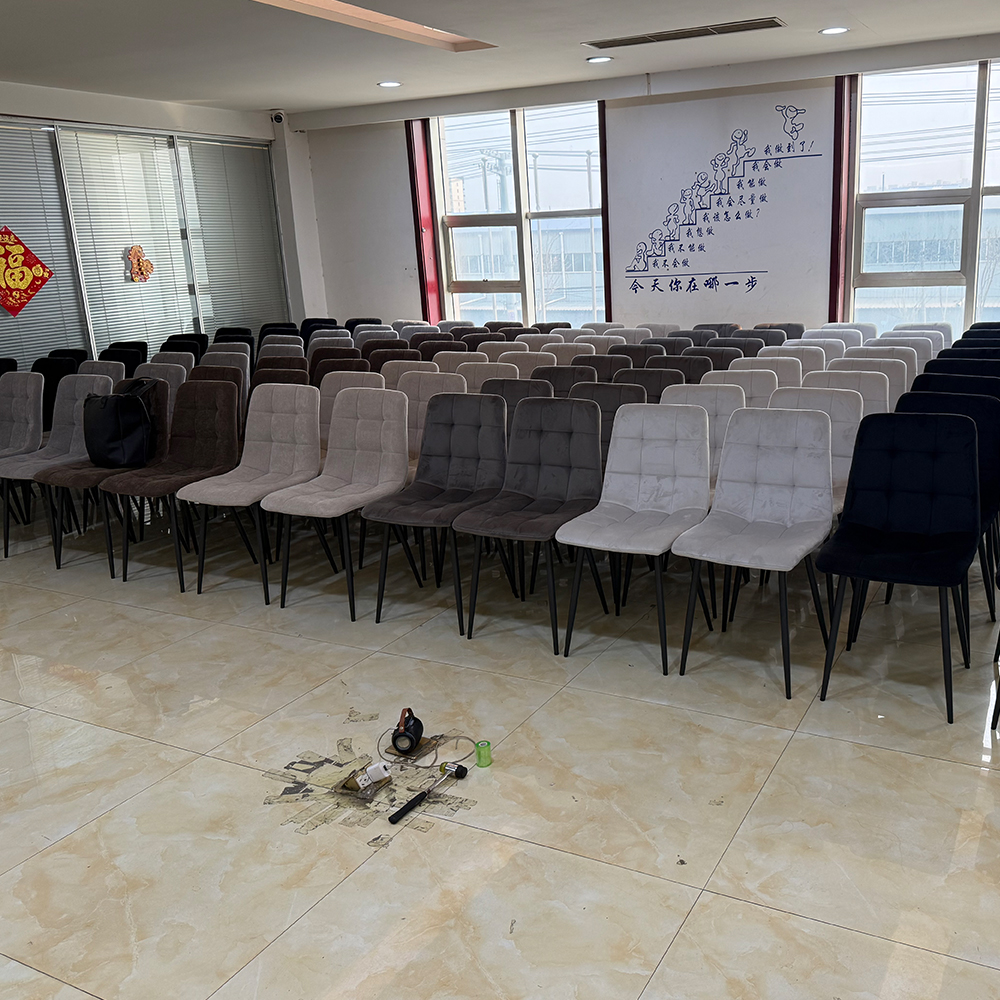
China offers a wide selection of dining chair designs, materials, and manufacturing solutions.
Whether you are looking for modern upholstered dining chairs, solid wood dining chairs, metal-frame dining chairs, or customized restaurant chairs, working with an experienced manufacturer can help you find suitable products for your target market.
With proper supplier evaluation, quality inspection, and import planning, buyers can reduce purchasing risks and build a more reliable furniture supply chain.
1.Looking for a Reliable Dining Chair Manufacturer in China?
We Langfang Ain Furniture offer a variety of modern dining chairs, wooden chairs, upholstered chairs, and customized furniture solutions for international buyers.
Contact us to explore our latest designs, discuss OEM and ODM requirements, and receive a competitive quotation for your next order.
2. EU Market Key Points
Core Standards and Certifications:
In the EU, furniture (including dining chairs) often needs to comply with standards such as EN 12520 (Household furniture—Chair structural strength, durability, and safety) and EN 1022 (Stability).
Additionally, attention should be paid to chemical restrictions (such as formaldehyde, heavy metals, and volatile organic compounds) and the legality of wood (such as the EU Timber Regulation (EUTR)). eurofins.com
Product Liability and Labelling Requirements:
While some chair categories may not require the “CE” mark, they still need to comply with the General Product Safety Regulation (EU) 2023/988 (GPSR) for the EU market.
Importers/distributors need to ensure that products are accompanied by compliant technical documentation, test reports, manufacturer information, warnings, and labels.
Production Consistency and Verification:
EU buyers often require manufacturers to maintain consistency between mass production and sample testing; changes in materials or structure should be promptly reassessed.
Timber and Environmental Responsibility: If the timber used for chairs is imported into the EU market, it must meet the Timber Legality Requirements (EUTR) and any applicable forest certifications (such as FSC).
V. Recommendations for Chinese Exporters/Purchasing Parties:
Conduct testing according to target market standards during the sample stage to identify structural, stability, chemical, and compliance issues as early as possible.
When signing contracts with factories, explicitly require compliance with corresponding US/EU standards, such as "chairs tested according to EN12520" or "formaldehyde emissions comply with US federal/California standards" as contractual clauses.
Maintain complete technical documentation: including test reports, material certificates, production batch numbers, and quality inspection records, for quick provision in case of market inspections.
Pay attention to the latest regulatory developments in the export destination: regulations may change (e.g., new fire safety/chemical requirements from the EU from 2025 onwards)—prioritize legality.
Ensure that packaging, labeling, and instructions also comply with import requirements, such as correctly indicating the manufacturer, country of origin, material composition, installation instructions, and warning signs.
VI. New Regulations and Developments Regarding Furniture Imports to EU Countries
Major New Regulations/Regulatory Developments
Regulation (EU) 2023/1115 — Prevents the entry of deforestation-related products into the EU market (“Deforestation-Free Products” Regulation, or EUDR). This regulation requires imported furniture using timber or wood-derived products to prove that its raw materials originate from land free from deforestation or degradation.
Implementation Time: For large operators, it begins on December 30, 2024; smaller businesses may have a grace period.
For furniture exports, this means:
Obtaining the coordinates of the timber's origin and legal compliance certificates;
Strengthening supply chain traceability.
REACH Regulation and Chemical Restrictions
Furniture materials, coatings, upholstery, cord, and paints often contain controlled chemical substances (such as formaldehyde, flame retardants, phthalates, and heavy metals). Exports to the EU must comply with REACH, POPs, and other regulations.
Exporters should ensure the provision of relevant chemical substance compliance declarations and material testing reports.
Structural Safety and Product Liability Regulation
According to the General Product Safety Regulation (GPSR), furniture products must ensure safety, durability, structural stability, and complete labeling.
Exporters and importers are obligated to fulfill their chain of responsibility for products in the EU market (e.g., product defect recalls, communication liability, etc.).
VII. Recommendations for Furniture/Dining Chair Exporters or Buyers
For the use of timber, especially imported timber or timber from non-EU countries, it is essential to verify the legal origin of the timber, deforestation risks, and supply chain traceability.
Chemical testing, material specifications, and structural strength testing should be conducted at the export sample stage to ensure compliance with REACH and GPSR requirements.
Establish comprehensive technical documentation (including test reports, material safety data, repair/disassembly guidelines, supplier declarations, etc.) to prepare for future DPP or market inspections.
Cooperate with importers, customs agents, and logistics services in target EU countries to understand the latest classification codes, customs declarations, and environmental/certification requirements (e.g., FSC, PEFC certificates for timber).
Pay attention to details such as packaging, labeling, and after-sales responsibility.
The following are some important regulations and developments regarding the export of furniture (including dining chairs) to EU countries—taking Germany and France as examples—for your reference in export preparation and compliance strategies:
Germany (as an EU member state)
Main Regulations and Procedures
According to the EU's "Import Guidelines," importing furniture from non-EU countries to Germany or other EU countries requires confirmation that the products meet all EU technical, safety, and environmental requirements.
Germany's domestic policy saw several customs regulations changes in 2025, such as updates to the Combined Nomenclature (CN) code, digital customs clearance processes, and stricter data and declaration systems.
When importing furniture and other goods into Germany, customs declaration is required, including using the EORI number, submitting an import declaration form (such as a SAD form), and paying taxes according to the HS/CN code or applying preferential tariffs.
Germany also requires importers to ensure the legal origin and sustainability of timber. The EU Regulation (EU) 2023/1115 (EUDR) on the prevention of deforestation of products applies to wood-derived goods such as furniture, requiring them to comply with the requirement that they not originate from deforestation land.
Regarding packaging and transport, Germany also emphasizes that imported furniture must adhere to appropriate packaging, labeling, and transport conditions to prevent damage during logistics.
France (as an EU member state)
Important Regulations and Liability Systems
In France, once furniture (including dining chairs) is imported or placed on the market, importers or manufacturers often assume the role of "Producer Responsibility." A key regulation is the French Environmental Code, which requires manufacturers/importers of furniture to register a Unique Producer Identifier (UIN) and join a certified eco-organization.
In other words, if you import furniture from China to France, and the buyer or you yourself place it on the French market, you need to register a UIN and fulfill your obligations regarding the recycling and disposal of furniture waste.
French importers must also ensure that the furniture complies with EU safety, health, and environmental standards (such as EN12520 and other chair structural safety standards) and provide the necessary test certificates.