+86 173 3000 3202

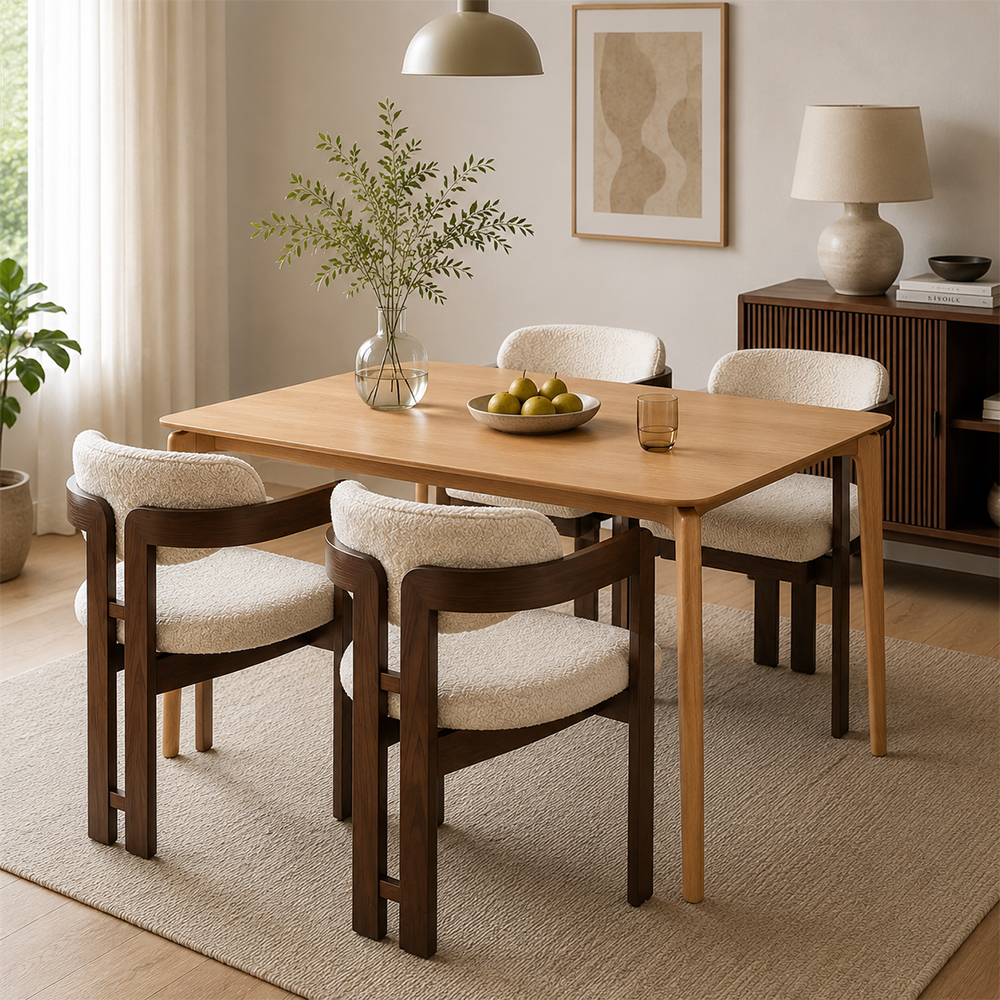
China is the world's largest importer of timber and the largest exporter of wood products. Solid wooden chairs reveal the beauty of nature and the primitive, being natural, environmentally friendly, and healthy—a fashionable and healthy choice that meets the psychological needs of modern urban dwellers who yearn for nature. China's production technology is also becoming increasingly sophisticated.
I. Major Imported Timber Types and Origins in China
1. Rosewood
Primarily from India and Myanmar, used for high-end furniture and handicrafts. Rosewood: Mainly produced in Southeast Asia (such as Laos and Vietnam) and Africa (such as Gabon), it is commonly used for furniture and musical instruments. Rosewood: Produced in Southeast Asia (Cambodia and Indonesia) and East Africa, mostly used in the making of classic furniture.
2. Hardwood
Oak wood: The United States and Russia are the main sources. White oak is used for wine barrels and flooring, while red oak is used for furniture and wooden doors.
Walnut wood: American walnut is the most well-known, with small quantities also imported from Europe, used for high-end furniture and piano cases.
Cherry wood: Mainly produced in the United States, with a vibrant color, suitable for interior decoration and musical instruments.
Beech wood: Primarily sourced from Europe (Germany, France) and Japan; hard and widely used for flooring and doors/windows.
3. Softwoods
Pine: Largely supplied by Russia, New Zealand, and the United States; light and soft, used in construction and papermaking (e.g., Finnish pine, radiata pine).
Spruce: Mainly produced by Canada and Russia; used in musical instruments and construction.
Cedar: Imported from Southeast Asia (e.g., Thailand); highly resistant to decay, primarily used for decoration and finishing.
4. Other specialty woods:
Teak: Core producing areas are Myanmar and Thailand; highly resistant to decay, used for ship decks and outdoor flooring.
Ebony: Supplied from Africa (e.g., Ghana) and Southeast Asia (Indonesia); hard and used for handicrafts and musical instruments.
Wenge: Produced in Southeast Asia and Africa; known for its unique grain; used for furniture and carving.
II. Distribution Characteristics of Solid Wood Imported Areas
Southeast Asia: The main source of rosewood (e.g., ebony, padauk) and teak, accounting for over 60% of China's rosewood imports.
North America: A core supplier of hardwoods such as oak, walnut, and cherry, with the United States dominating the hardwood trade.
Europe: A major producer of pine, beech, and spruce, with Russia consistently ranking first in pine imports.
Africa: An important supplementary source of mahogany, such as ebony and rosewood, with Gabon and the Republic of Congo being major exporting countries.
III. China's Solid Wood Import Data
In the first half of 2025, China's total timber imports reached 28.94 million cubic meters, with an import value of approximately US$4.1744 trillion. Log imports amounted to 16.79 million cubic meters, accounting for 58% of the total. The total value was US$2.695 billion, with ash and oak maintaining their growth momentum.
IV. Solid Wooden Chair Production Process
1. Material
Selection Exported solid wood chairs mainly use beech wood, ash wood, oak wood, and walnut wood.
2. Board Drying
The moisture content of the wood is controlled at 8%-10%. Drying prevents cracking and warping.
3. Balancing
The dried wood is left to rest for a period of time to allow it to regain its balance.
4. Panel Assembly
Both sides are planned to the desired thickness.
5. Panel Joining
Prepared individual pieces are glued together, then each panel is pressed and cured. The shaped panels are then cut into the desired shape using a band saw.
6. Sanding
As needed, the panels are assembled into rough blanks, which can then be processed in batches using a five-axis milling machine. The armrest material requires very high power to ensure no tool marks during repair, and it's a multi-station production line, capable of producing 8 standard parts at a time.
7. Grinding
Finished parts are milled off the fixed corners at both ends using screws. Irregularly shaped parts require hand grinders, while parts with the same shape can be batch-ground using a profile grinder, but the ends still require manual grinding.
8. Assembly
Glue is applied to the tenon and mortise joints, then the parts are assembled.
9. Painting
After assembly, before applying the primer, a thorough sanding is performed to ensure adhesion. Then, the primer is sprayed, sanded again, and the topcoat is applied.
10. Packaging
Check the overall color scheme of the product for consistency, ensuring there are no uneven shades. Observe the paint surface under natural light for smoothness, runs, uneven spraying, orange peel, missed areas, or hazy white areas. Touch test: Run your hand over the paint surface to check for smoothness and the presence of particles. Feel the texture and feel of the paint to ensure it is pleasant. Repair surface imperfections on the chairs, blow away dust from the surface, and package the product.
V. Best-Selling Styles
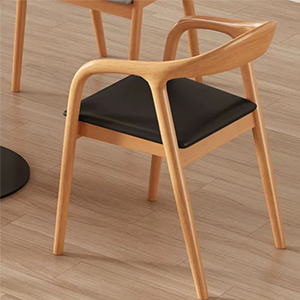
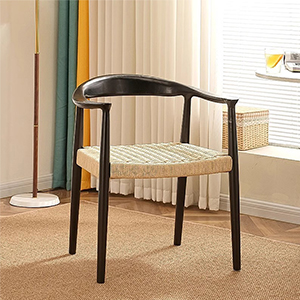
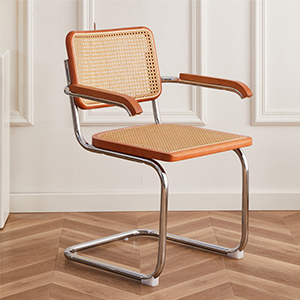
Solid wood chairs come in various combinations: pure solid wood chairs, rattan solid wood chairs, and solid wood chairs with upholstered seats. Based on our 17 years of export experience, we recommend several styles favored by European and South American customers, which have consistently achieved high sales volumes.
VI. Solid Wood Chair Maintenance
During daily use, it is essential to maintain solid wood chairs properly. Only by focusing on daily maintenance can you maintain the lifespan and bright appearance of the chairs.
1. Pay attention to cleaning and maintaining the furniture surface.
The surface of solid wood chairs on the market is coated with paint. Maintaining the paint film is particularly important during use. Once the paint film is damaged, it not only affects the appearance but may also affect the structure of the furniture. Therefore, to keep solid wood furniture clean, it is recommended to wipe the surface dust with a cotton cloth.
2. Avoid using chemical solvents to remove stains.
If there are stains on the surface of solid wood furniture, never rub them vigorously, and never use chemical solvents such as alcohol or gasoline to remove them.
3. Avoid scratches from hard objects.
When cleaning, avoid using cleaning tools that bump into the furniture surface, and avoid rubbing the furniture with hard metal objects or sharp tools. Otherwise, the furniture surface will be scratched and difficult to repair.
4. Keep away from heat sources.
It is recommended to keep the distance between furniture and heat sources at about 1 meter. Otherwise, prolonged exposure to heat can cause the wood to crack, warp, and the paint film to deteriorate.